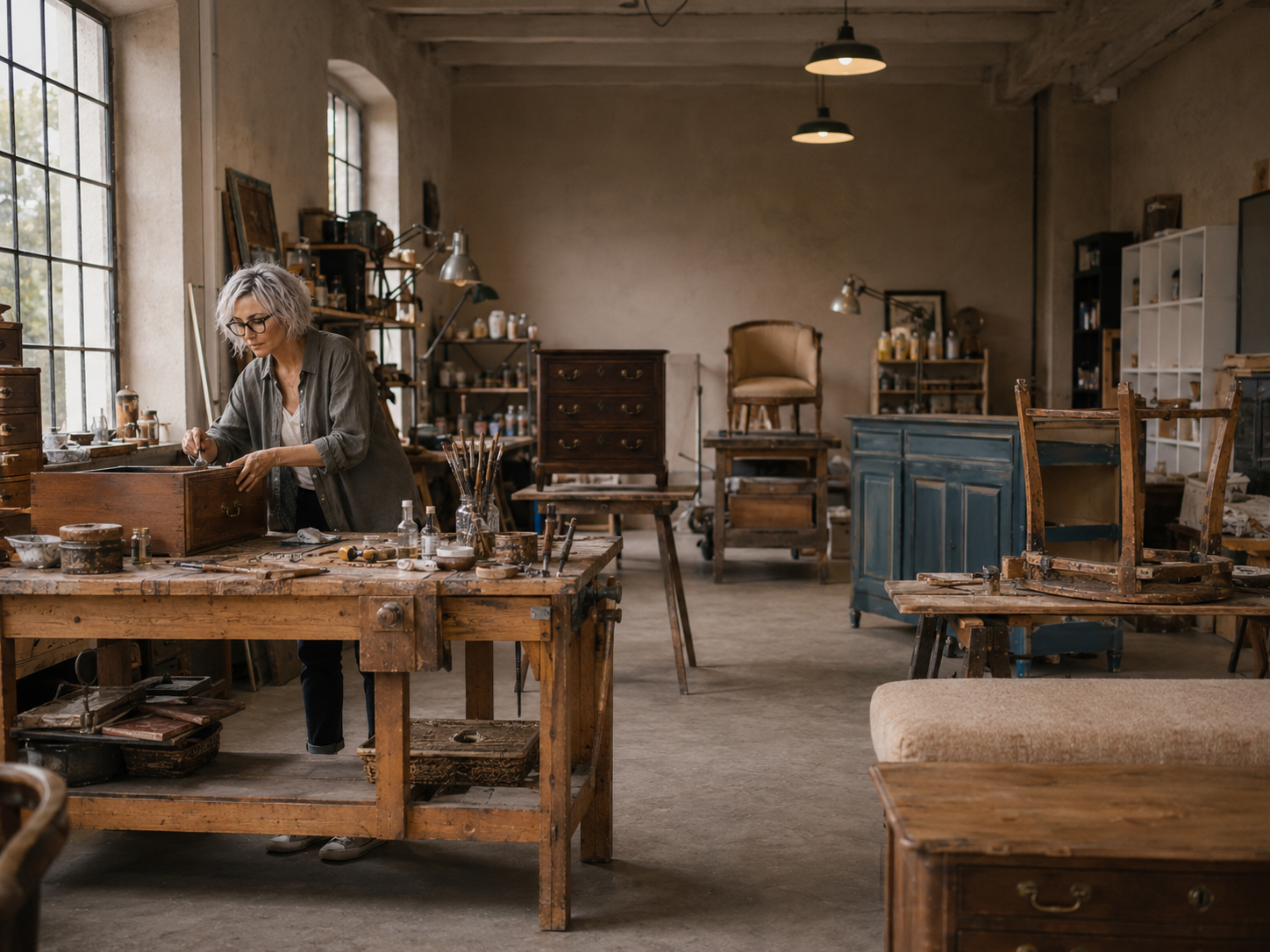
In The Light of Lost Things
Certain objects are not replaceable.
They are entrusted. They carry history, craftsmanship, and often quiet emotional and financial weight — whether inherited across generations or carefully acquired. Placing such a piece in someone’s hands requires certainty. This work is built on that responsibility.
The studio operates on a foundation of European academic training in art conservation, art history, and the history of furniture and craftsmanship. This background informs a disciplined, conservation-led methodology — one that prioritizes material integrity over visual effect, and long-term value over short-term appearance. Each piece follows a structured process:careful assessment of structure, materials, condition identification of original techniques and finishes stabilization of all vulnerable and load-bearing elements conservation-led treatment, avoiding irreversible alteration.
The objective is precise:
To preserve authenticity while restoring structural and visual coherence.Antique furniture is never repainted, stylized, or altered to follow contemporary taste.No artificial finishes. No decorative reinterpretation Because once originality is removed, it cannot be restored.Contemporary pieces may allow for transformation. Antiques require knowledge, restraint, and accountability.The result is not a piece that appears new .It is a piece that is stable, coherent, and historically respected —capable of continuing its life with integrity.
A matter of custody:
Certain objects enter the studio not as items, but as entrusted pieces carrying both cultural and material value. This responsibility defines every decision. Each intervention is guided by clear principles-original surfaces and finishes are retained wherever possible materials are selected for compatibility and longevity historical accuracy governs all treatments restraint defines the scope of work
Nothing is introduced that would compromise the object’s identity or its future.The aim is not to impose a new character,but to ensure the object remains true to itself — structurally sound, visually coherent, and authentic.
Final note:
What is entrusted here is treated with the discipline required to preserve its value over time.